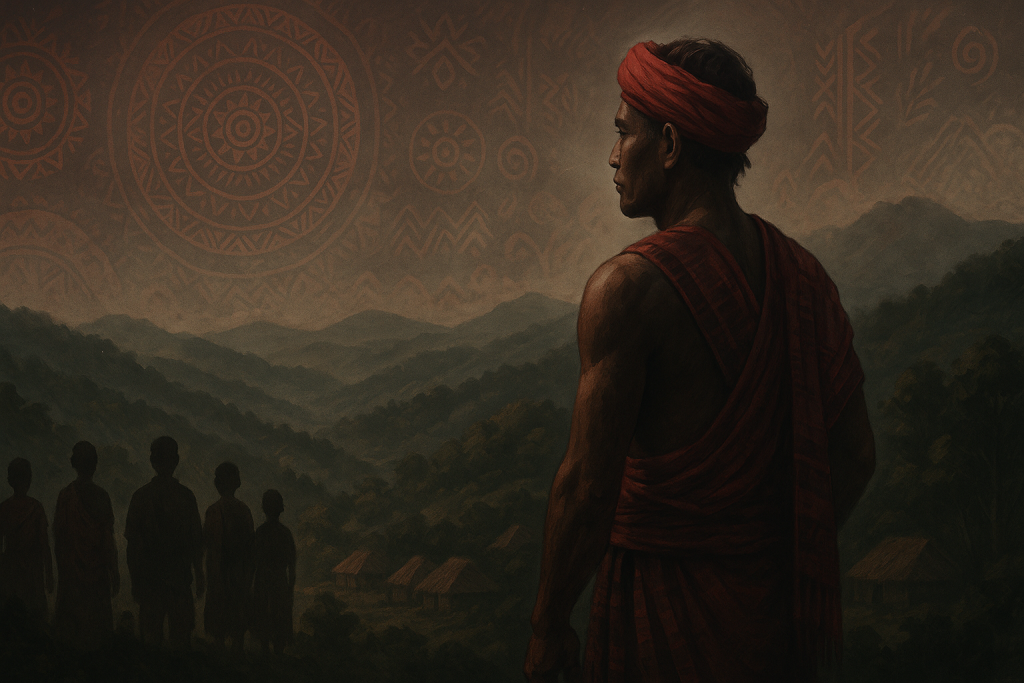
The Battle of 1872 Rongrenggre 1872
- Home
- Battle of 1872
A vivid account of strategy, courage, and the final stand at Rongrenggre.
Detailed narrative of the final battle
The final confrontation at Rongrenggre marked a defining moment in the Garo resistance under Pa Togan Sangma’s leadership. By this time, tensions had reached a critical peak due to sustained colonial encroachment, restrictions on customs, and previous acts of defiance that united the community in opposition. The Garo villages had spent months organizing, mobilizing youth and elders alike, and reinforcing their collective strategy. Pa Togan Sangma emphasized preparation over aggression, instructing his people on vigilance, coordination, and the protection of ancestral lands. Every action was deliberate, with a clear understanding of both the stakes and the ethical responsibility to minimize unnecessary harm.
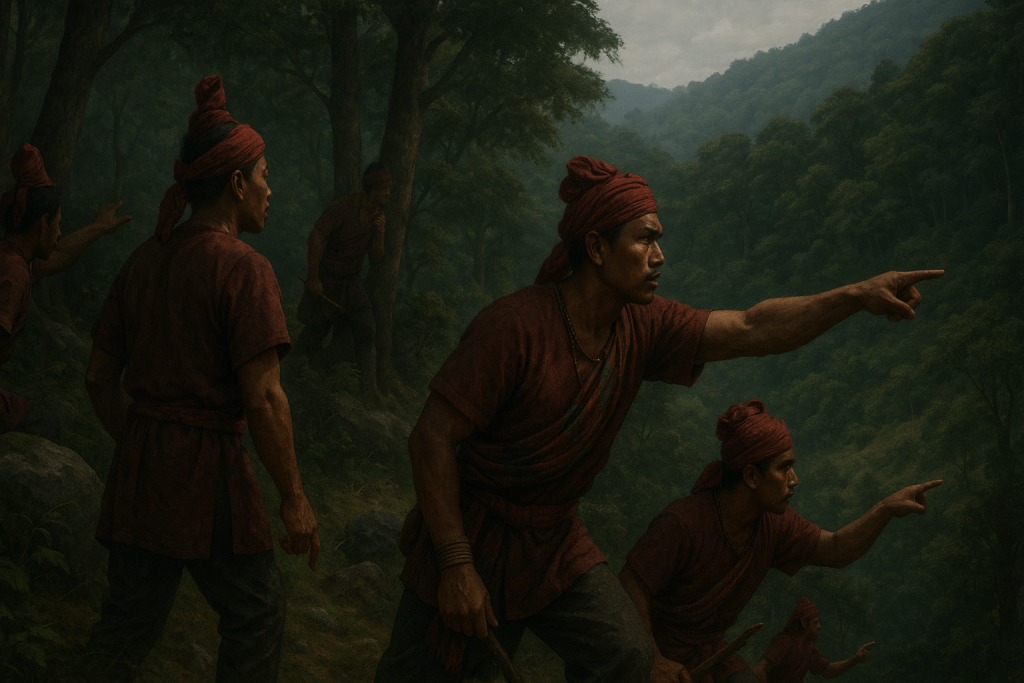
On the morning of the confrontation, the Garo community gathered strategically in the hilly terrain surrounding Rongrenggre, using their deep knowledge of the landscape to their advantage. Leaders like Pa Togan Sangma coordinated positions, ensured communication between scattered groups, and maintained morale through speeches and encouragement. Villagers carried only essential tools and symbolic weapons, emphasizing defense and unity rather than offensive warfare. The atmosphere was tense but resolute, as the people recognized that the battle was not merely for land but for cultural survival, dignity, and self-determination.
Throughout the engagement, Pa Togan Sangma’s leadership was evident in his ability to balance courage with caution. He guided movements, resolved conflicts within ranks, and ensured that no individual acted recklessly, reinforcing the importance of collective discipline. The warriors and villagers displayed extraordinary bravery, drawing strength from their shared heritage, ancestral teachings, and the unifying belief in defending what was sacred. Even under pressure, they upheld tribal ethics, showing respect for life and the community above personal glory. The engagement at Rongrenggre ultimately demonstrated the effectiveness of organized leadership, cultural cohesion, and strategic thinking in resisting external imposition, leaving a lasting legacy of courage, unity, and pride for generations of the Garo people.
As the battle progressed, the Garo warriors demonstrated remarkable coordination, moving in synchronized groups across the hilly terrain. Pa Togan Sangma emphasized the use of natural cover, observation points, and strategic positioning, ensuring that each action supported the larger objective of protecting the community. Even amidst chaos and uncertainty, his calm presence inspired confidence. Young warriors learned from the elders’ guidance, and the elders relied on the younger members’ energy, reflecting a seamless intergenerational cooperation that defined the Garo resistance. Every decision balanced tactical necessity with ethical responsibility, reinforcing the principle that leadership meant serving the people, not seeking personal glory.
In the aftermath, the community faced the consequences of confrontation with courage and resilience. The victory or stand at Rongrenggre was measured not only in terms of territorial defense but in the reaffirmation of tribal identity, cultural continuity, and moral principles. Stories of bravery, sacrifice, and unity were recounted in oral histories, strengthening communal bonds for generations. Pa Togan Sangma’s leadership left an enduring imprint, illustrating that resistance rooted in strategy, ethics, and cultural pride could withstand external pressures. The battle became a symbol of collective resolve, inspiring future generations to honor their heritage while upholding justice, dignity, and the spirit of the Garo people.
Strategic wisdom, discipline, and unity that guided the resistance.
Tactics Used by Pa Togan Sangma and the Garo Warriors
Pa Togan Sangma and the Garo warriors employed tactics deeply rooted in knowledge of the terrain, communal coordination, and disciplined strategy. They leveraged the hilly forests, rivers, and natural obstacles to their advantage, moving silently and observing enemy positions before making critical decisions. Communication between groups was maintained through signals and trusted messengers, ensuring that actions were coordinated and risks minimized. Ambushes, defensive formations, and protective perimeters were designed not to harm unnecessarily, but to safeguard villages, elders, and essential resources. The emphasis on preparation, foresight, and ethical conduct distinguished their approach, demonstrating that effective resistance relied on unity, planning, and moral clarity rather than brute force alone. These tactics reflected both cultural wisdom and practical intelligence.
Colonial reaction, consequences, and the lasting impact on the Garo Hills.
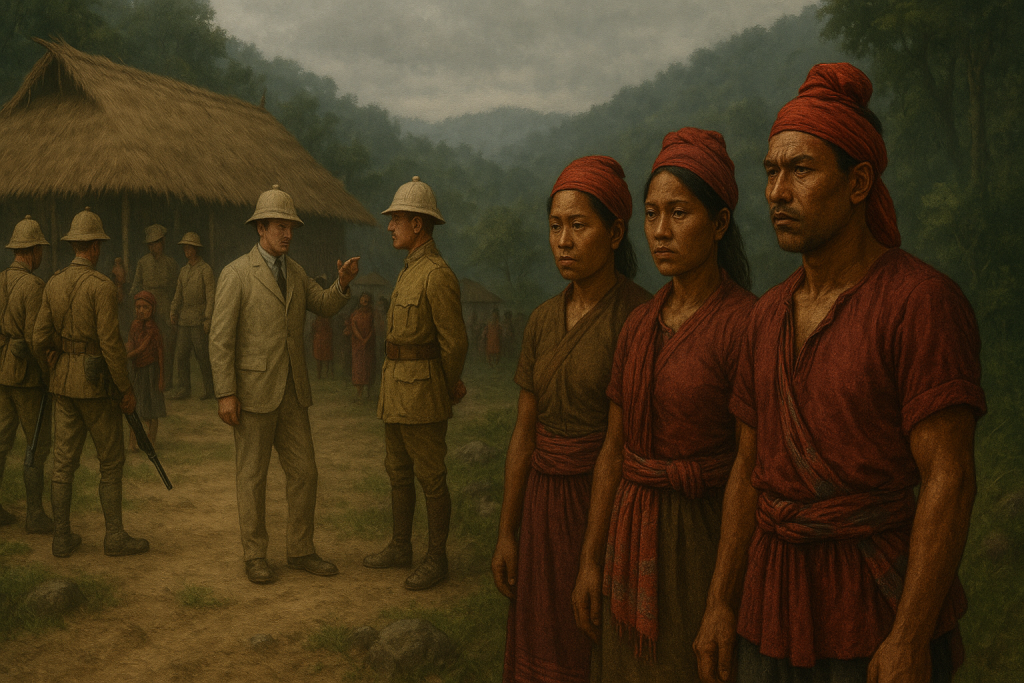
Colonial reaction, consequences, and the lasting impact on the Garo Hills.
Following the confrontation at Rongrenggre, British authorities responded by reinforcing administrative control across the Garo Hills. Military patrols increased, surveillance intensified, and efforts were made to suppress further resistance through legal and political measures. Traditional leadership structures faced growing pressure, as colonial governance sought to replace customary authority with imposed systems of control. Villages experienced heightened scrutiny, and movement within forest regions became more restricted.
Despite these measures, the resistance left a deep imprint on colonial policy, forcing officials to recognize the resilience and unity of the Garo people. In the aftermath, the community endured loss and hardship but emerged with strengthened cultural identity and collective memory. Pa Togan Sangma’s leadership became a symbol of dignity and resistance, influencing future generations and shaping regional consciousness long after the immediate conflict ended.
A turning point in tribal resistance, identity, and regional history.
Historical Significance of the Uprising
The uprising led by Pa Togan Sangma holds profound historical significance in the context of tribal resistance in Northeast India. It was not merely a localized reaction to colonial pressure, but a collective assertion of indigenous rights, autonomy, and cultural dignity. At a time when colonial rule sought to impose external systems of governance and land control, the Garo uprising demonstrated that tribal communities were politically aware, strategically capable, and deeply committed to preserving their way of life.
This movement challenged the colonial narrative that tribal societies were passive or disorganized. Instead, it revealed a structured resistance rooted in traditional leadership, communal decision-making, and ethical codes of conduct. The uprising compelled colonial authorities to reassess their approach toward tribal regions, influencing administrative policies and engagement with indigenous leadership.